7 Common Mistakes When Cleaning Your Water Tank Yourself
Cleaning the tank yourself may seem like a saving — but it often backfires. Learn the most common mistakes that leave the tank more contaminated after the "cleaning".
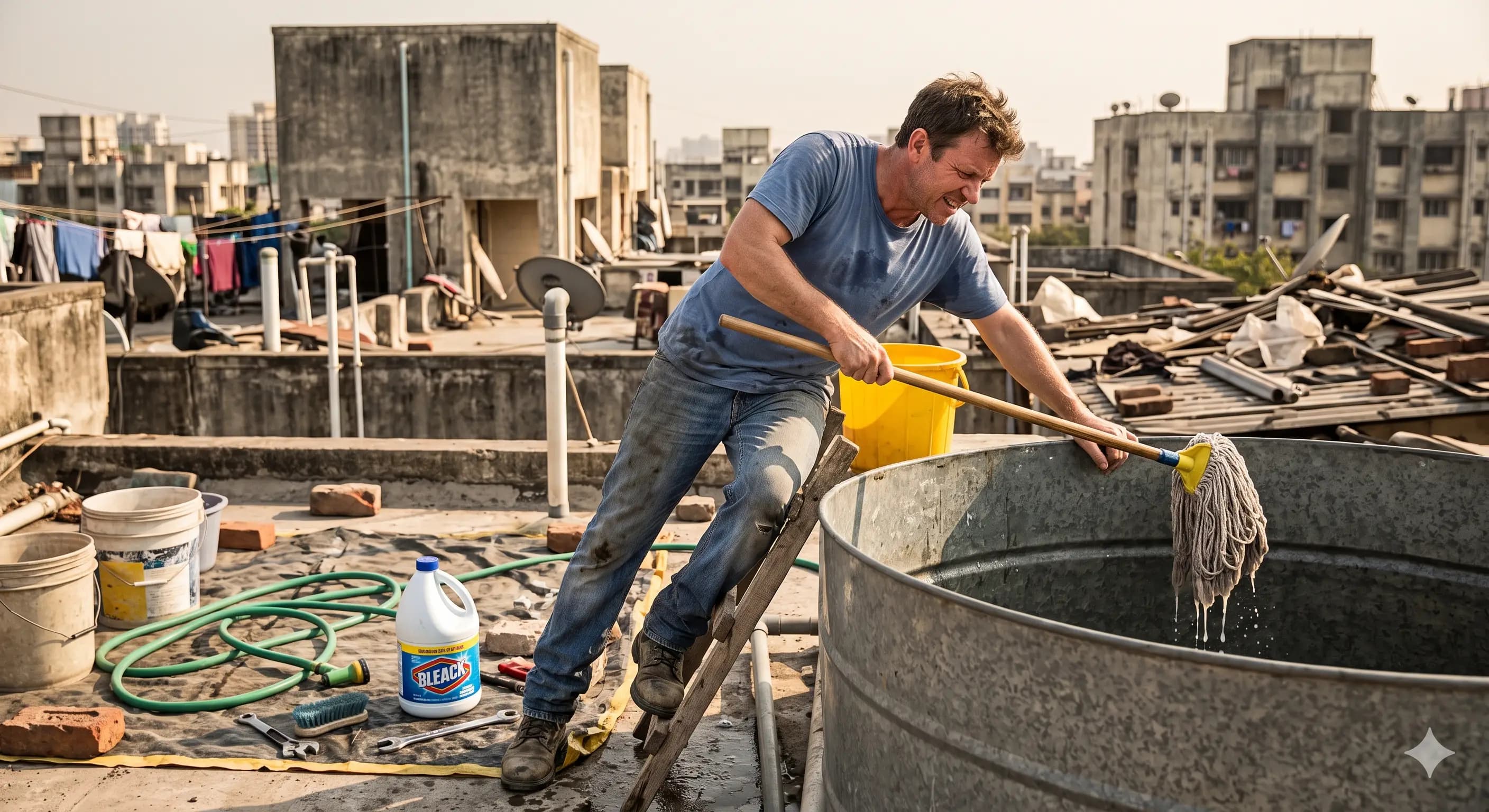
You may have tried cleaning your tank yourself: you went down into it with a hose and a brush and came back confident in the result. But did you know this method may leave the tank more contaminated than before? Here are the mistakes most people make.
1. Using Ordinary Household Cleaning Products
Soap, Dettol, and even household bleach are not approved materials for sanitizing drinking water. Some leave harmful chemical residue in the water, and some don’t kill microorganisms at the concentration suitable for water tanks.
2. Not Fully Draining the Tank Before Cleaning
Cleaning while some water remains at the bottom means you’re stirring up the sediment and redistributing it without removing it. The tank must be drained completely, down to the last drop, before you start.
3. Neglecting the Corners, Floor, and Recesses
Bacteria and algae accumulate heavily in the lower corners and around the inlet and outlet points. A quick rinse with a hose doesn’t reach them — direct scrubbing with specialized brushes is required.
4. Entering the Tank Without Safety Precautions
Sealed tanks may contain accumulated gases such as carbon dioxide or methane. Going in directly without prior ventilation is a real danger, and there have been incidents of fainting and death because of it.
5. Insufficient Rinsing After Sanitizing
If you used any disinfectant and didn’t rinse the tank well, chemical residue will remain in the water. Sufficient rinsing means filling the tank with water and draining it once or twice before use.
6. Neglecting the Lid and Vents
Many people clean the inside body and leave the lid dirty. A contaminated lid returns the dirt to the tank with the first rain or wind. Cleaning the lid and making sure it’s tightly sealed is an essential part of the process.
7. Not Waiting Before Refilling
After cleaning, the tank should be left to dry before refilling it with water — especially if disinfectants were used. Immediate refilling dilutes the disinfectants’ effect and reduces their effectiveness.
The illusory saving of cleaning the tank yourself may cost you many times more in doctor’s bills. Leave the task to those who have the right tools, experience, and materials.
The Crystaleh team follows a specific 6-stage protocol that guarantees a safe, healthy result. Request the service with peace of mind.
You might also like


Need a tank cleaning service?
Contact us today and get professional service with a full guarantee